


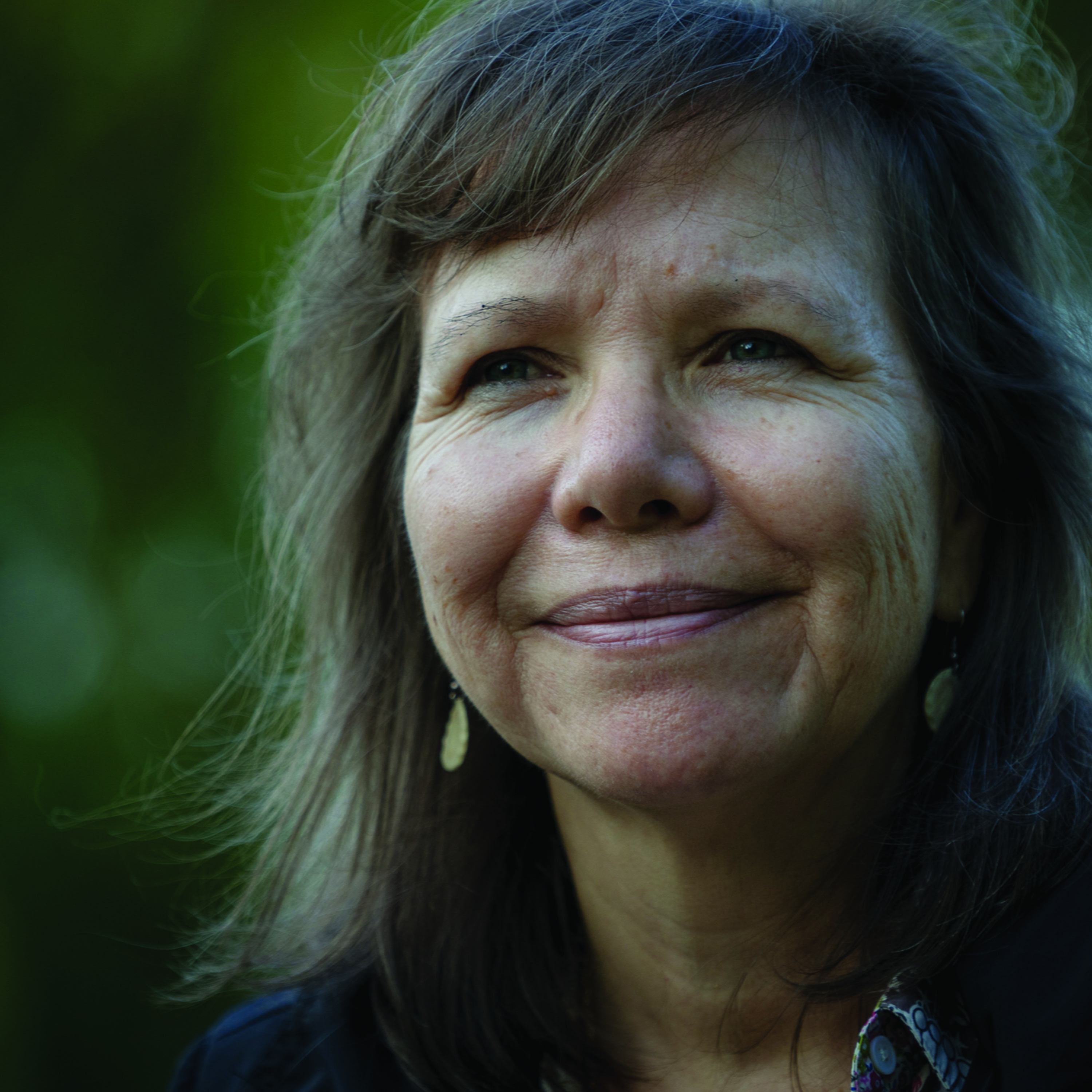
Confluents Special Episode / Confluents hors série (Exceptionnellement, cette entrevue est réalisée en anglais. Pour lire la description de l’épisode en français, merci de consulter notre site Web : https://missioncheznous.com/entrevue-exclusive-avec-ellen-gabriel/ .) On the occasion of the 35th anniversary of what has come to be known as the "Oka Crisis," Confluents presents a special episode dedicated to one of the leading advocates for the protection and promotion of Indigenous rights in Canada:activist and award-winning artist and documentary filmmaker Ellen Gabriel, also known by her Kanienʼkéha name, Katsi'tsakwas. Katsi’tsakwas Ellen Gabriel was born and raised in Kanehsatà:ke, a Kanien’kehá:ka (Mohawk) community located just north of Montreal and entirely surrounded by the municipality of Oka. In 1990, the proposed expansion of a golf course onto a pine forest and burial ground sacred to the Kanien’kehá:ka people sparked an armed confrontation between the community, the Sûreté du Québec, and, later, the Canadian Armed Forces, a standoff that lasted 78 days, from July 11 to September 26. During this "Oka Crisis," which she prefers to call the "Siege of Kanehsatà:ke," Katsi’tsakwas Ellen Gabriel became one of the most high-profile spokespersons for her nation. Despite her young age, she played a central role in this historic resistance, an event that left profound and lasting impacts — not only on her personal life, but also on her community and on the relationship between Indigenous and non-Indigenous people across Canada. The confrontation, which garnered worldwide media attention, also redefined the Canadian population perception of Indigenous rights and claims, and of the centuries-old resistance of First Nations across the country. Internationally, it sparked a broader reflection on Indigenous territorial rights and political aspirations. Since the 1990 conflict, Katsi’tsakwas Ellen Gabriel has dedicated herself to advancing the rights of Indigenous Peoples both in Canada and internationally, and to seeking justice for missing and murdered Indigenous women. Katsi’tsakwas Ellen Gabriel served as President of the Quebec Native Women’s Association from 2004 to 2010 and has spoken on some of the world’s most prestigious stages, including the United Nations. A renowned documentarian and visual artist, she was the first Indigenous artist to receive the Grand Prix from the Conseil des arts de Montréal in 2024, a prestigious award established 38 years earlier. Recently, Katsi’tsakwas Ellen Gabriel published When the Pine Needles Fall: Indigenous Acts of Resistance , a book of interviews with historian Sean Carleton, in which she reflects on her role and the realities she faced in the Oka Crisis/Siege of Kanehsatà:ke. In this book, she also discusses her unwavering commitment as an activist, feminist, and land protector. Her book is now available in French from Éditions du remue-ménage . In this interview, conducted by Catherine Ego and Mathieu Lavigne, Katsi’tsakwas Ellen Gabriel recounts the events of Kanehsatà:ke in 1990 from an insider’s perspective, the struggles that have driven her throughout her life, and her hopes for the future. On the Confluents microphone, she provides an Indigenous and feminist perspective on events that have too often been told by others, rather than by those directly involved. Interview: Catherine Ego and Mathieu Lavigne Editing: Catherine Ego Music: Arturo Parra Photo of Katsi’tsakwas Ellen Gabriel: Alan Lissner (courtesy of Éditions du remue-ménage) The production of Confluents is made possible thanks to the financial support of the Oblates franciscaines de Saint-Joseph, the Fonds Roland-Leclerc and the Fondation Lucien-Labelle.